Structural Moving Terminology and Engineering Atlas
This 15-entry technical atlas standardizes structural moving terminology, hydraulic jacking specs, and permitting metrics archived from 2005 to 2026.
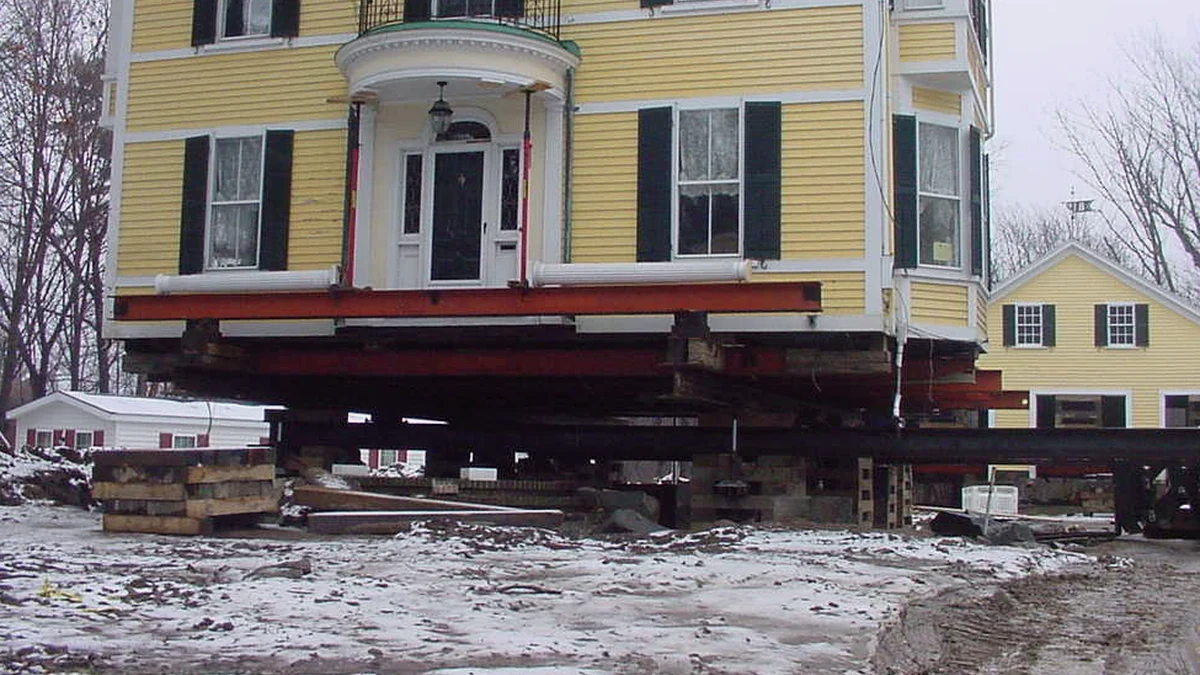
- Standardized definitions prevent specification errors between rigging foremen, structural engineers, and municipal permit officers.
- All 15 entries cover four core disciplines: Steel Framing, Hydraulic Systems, Cribbing Geometry, and Route Logistics.
- Archival terminology aligns with 2005-2026 New England field documentation from North Hampton, New Hampshire.
Purpose and Scope of the Structural Moving Atlas
Structural relocation blends heavy civil engineering, historic preservation, and specialized highway transport. Because rigging crews, bridge engineers, and utility coordinators use distinct trade vocabularies, clear definitions are essential during permit applications and pre-lift safety briefings. The entries below standardize fifteen foundational terms documented across Northeast Building Movers Archive records since 2005.
How to Use These Four Engineering Categories
Entries are grouped into Steel Framing, Hydraulic Systems, Cribbing Geometry, and Route Logistics. Each entry states the physical role of the component or procedure, its typical dimensional or load benchmark, and how it protects the building envelope during elevation and transit.
Main Carrying Beam
Primary longitudinal steel wide-flange I-beam (commonly W24 to W36) positioned beneath a structure to span between hydraulic jacking points and transport dollies.
Cross-Needle Beam
Transverse steel beam (typically W10 to W16) threaded perpendicular over main carrying beams at 36-inch to 72-inch centers to support joists and bearing walls.
Channel Waler
Exterior horizontal steel C-channel clamped around brittle brick or stone walls with tensioned tie-rods to prevent outward bowing during relocation.
Collar Beam
Reinforced concrete or steel perimeter ring cast around the base of a rubble fieldstone wall to bind loose masonry into a monolithic lifting unit.
Unified Jacking Manifold
Centralized split-flow hydraulic distribution unit that meters equal fluid volume to all connected cylinders, holding lift variance within 0.125 inches.
Lock-Nut Cylinder
Hydraulic ram equipped with a threaded mechanical collar that locks against the cylinder body to support dead loads mechanically without fluid pressure.
Three-Point Suspension
Hydraulic grouping of transport dollies into three balanced pressure zones so the building rides on a geometrically stable tripod plane over uneven roads.
Breakaway Load
Initial hydraulic force required to overcome dead weight and residual friction when separating a sill plate from its original masonry foundation.
Oak Box Cribbing
Temporary support tower built from alternating perpendicular layers of seasoned 6x8 or 8x8 hardwood timbers rated up to 350 psi perpendicular to grain.
Timber Crane Mat
Heavy bolted hardwood platform (typically 8x12 timbers) laid beneath cribbing stacks to distribute concentrated loads over soft soil.
Hardwood Crush Pad
Thin 0.5-inch oak or birch shim placed between two steel beam flanges to increase friction and eliminate metal-on-metal slip under load.
Stability Ratio (4:1)
Safety benchmark requiring the base width of a freestanding cribbing tower to measure at least one-quarter of its total vertical height.
Laser Height Pole
Graduated fiberglass measuring mast mounted on a survey vehicle to record exact overhead wire, traffic signal, and bridge clearances along a move route.
Swept Turning Radius
Total horizontal path traced by the outermost corners and rear overhang of a loaded building when negotiating intersections with steerable dollies.
Superload Bridge Review
State DOT structural engineering evaluation of axle spacing, tire footprint, and gross weight against culvert and bridge span capacity limits.
Frequently Asked Questions
What is the difference between a main carrying beam and a cross-needle beam?
Main carrying beams run longitudinally to support the entire rig on jacks or dollies, while shorter cross-needle beams sit above them to catch floor joists and walls.
Why are three hydraulic zones used on transport dollies?
Grouping dolly axles into three independent hydraulic zones creates a stable tripod plane that absorbs road crown changes without twisting the building.
What does a crib-stack stability ratio measure?
It compares the base width of a timber cribbing tower to its vertical height, ensuring a minimum 1-to-4 width-to-height ratio against tipping.
Related Archive Dispatches
Further ReadingStructural Rigging Systems and Load Transfer Standards
Northeast Building Movers Archive documents 2005-2026 structural rigging standards, including 36-inch steel W-beams rated for
Route Permitting, Utility Clearance, and Corridor Logistics
Route permitting protocols archived from 2005 to 2026 coordinate state DOT oversize loads, bridge ratings, and 18-foot utility
Unified Hydraulic Jacking and Timber Cribbing Mechanics
Unified hydraulic manifolds lift 240-ton structures within 0.125-inch tolerances across 24 jacking points, documented in